Natural Stone vs. Stone Veneer: Which is Right for Your Colorado Home?
Natural Stone vs. Stone Veneer: Which is Right for Your CO Home? Upgrading your home’s exterior or adding a stunning interior accent wall brings incredible
EVail, CO
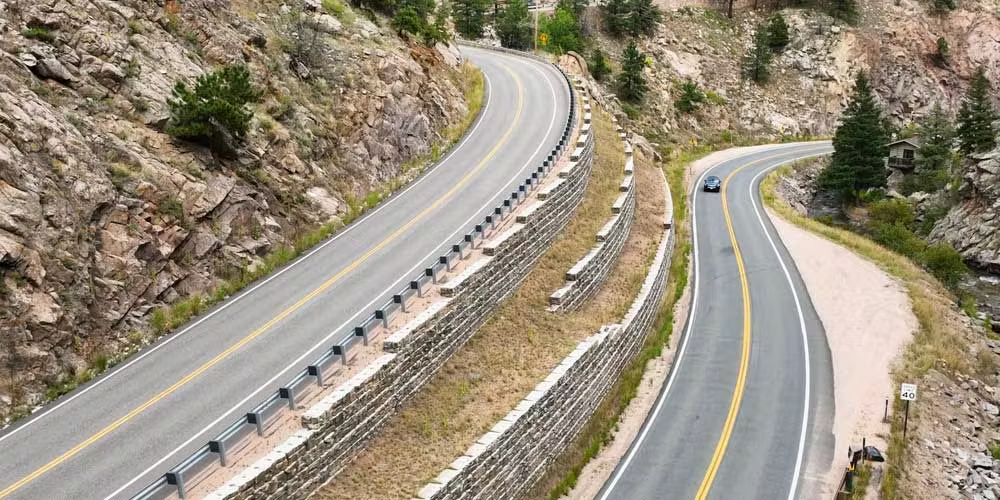
Location: Colorado State Highway 119 (Between Boulder and Nederland)
Engineers: Yeh and Associates; Ground Engineering
Wall Type: Gravity Walls
Total Wall Face: 11,500 sq. ft (approx. 1,070 sq. meters)
Maximum Height: 18.5 ft (5.6 meters)
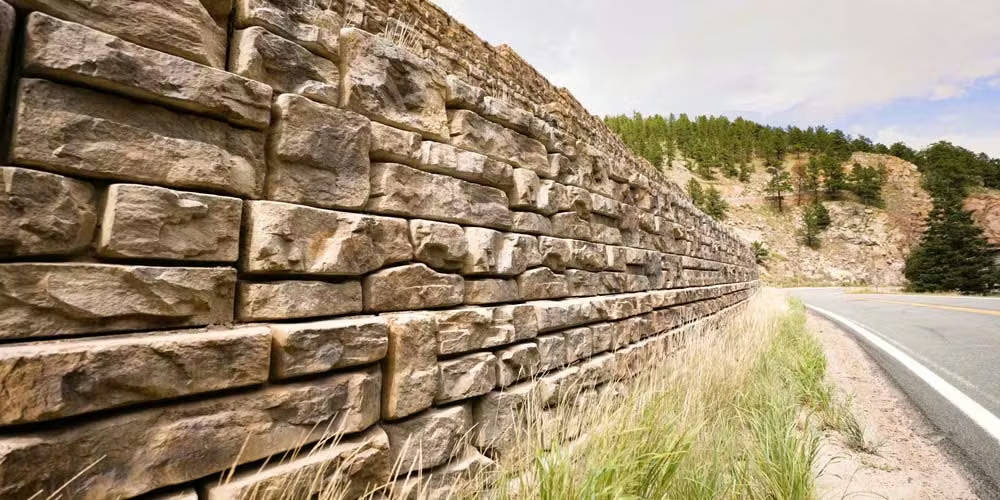
The Colorado Department of Transportation (CDOT) faced a significant engineering hurdle on Highway 119—a critical link between Boulder and Nederland. To improve safety and road geometry, the highway required widening in a steep, mountainous canyon.
Traditional construction methods were complicated by several factors:
Tight Footprint: The narrow canyon provided very little room for excavation or massive reinforcement zones.
Environmental Sensitivity: The project needed to minimize the impact on the surrounding natural landscape.
Traffic Flow: Because this is a high-traffic mountain pass, the solution needed to allow for efficient installation to minimize road closures.
Working in conjunction with Yeh and Associates and Ground Engineering, a gravity wall system was selected as the optimal solution. This approach eliminated the need for geogrid or extensive tie-backs, which would have required significantly more excavation into the mountain.
Key technical aspects of the solution included:
Utilization of Massive Blocks: The project utilized large-scale precast blocks to provide the necessary mass for stability.
Optimized Wall Design: Dr. Sean Chiang and the engineering team designed several wall segments, including a primary wall reaching heights of up to 18.5 feet.
Aggregate Infill: To handle the specific drainage needs of the canyon environment, a 3/4-inch angular aggregate was used for infill.
The installation process was streamlined to meet the project’s demanding schedule:
Efficient Staging: Blocks were delivered and staged to allow for continuous installation.
Speed of Construction: By using a gravity system, the crew was able to install the blocks rapidly without waiting for the time-consuming process of geogrid placement and compaction.
Tight Tolerances: The system successfully navigated the curves and elevation changes inherent in the canyon highway.
The project was completed successfully, providing the structural integrity needed to widen Highway 119 while maintaining the aesthetic harmony of the canyon.
Structural Success: Over 11,500 square feet of wall face now provide long-term stabilization for the highway.
Safety Improvements: The widened road allows for safer travel for thousands of commuters and tourists daily.
Professional Recognition: The project stands as a benchmark for using gravity wall systems in challenging, high-altitude environments.

Natural Stone vs. Stone Veneer: Which is Right for Your CO Home? Upgrading your home’s exterior or adding a stunning interior accent wall brings incredible

Elevate Your Colorado Community: Premium HOA Fencing Home builders and HOA boards face unique challenges when selecting boundary walls for new residential developments. You need

When the Village of Snowmass needed to expand the Melton Ranch Trail along a steep, narrow mountainside, they required a massive structural solution with minimal excavation footprint. Learn how over 8,000 square feet of Redi-Rock gravity blocks provided the safety, durability, and natural aesthetic needed to make this system the village’s new standard for retaining walls.